Home Bar Essentials: the Complete Checklist
Published
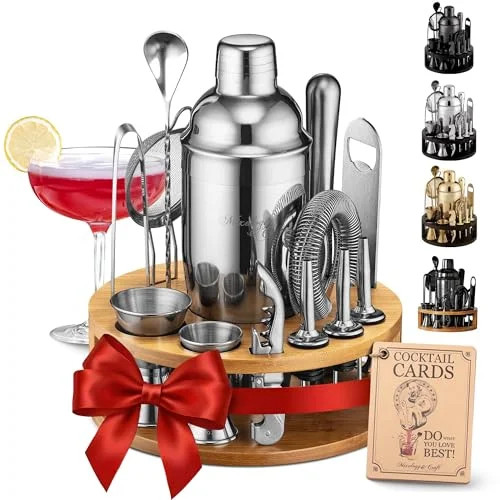
A functional home bar comes down to a short list: seven core tools (shaker, jigger, Hawthorne strainer, bar spoon, muddler, mixing glass, citrus juicer), the six base spirits, three glass shapes (rocks, highball, coupe), and honest ice. A starter setup runs about $150 to $250.
Most of these pieces last decades, and working bartenders make thousands of drinks with surprisingly little equipment, and the classic-cocktail canon leans on the same few bottles again and again. That means a home bar is a checklist problem, not a collection problem. Here is the complete list, what each item unlocks, and three budget tiers to build from.
The Seven Essential Bar Tools
- Jigger. The measuring cup of the bar and the single biggest upgrade to your drinks; balanced cocktails are measured cocktails. The standard double jigger reads 1.5 oz / 0.75 oz, the other common size is 2 oz / 1 oz, and “a jigger” in an old recipe means 1.5 oz.
- Cocktail shaker. Chills, dilutes, and aerates anything with citrus, cream, or egg. A three-piece cobbler has the strainer built in and is the beginner’s answer; the two-piece Boston is the bar-speed answer. Our walkthrough of both techniques covers the seal, the shake, and the science.
- Hawthorne strainer. The spring-coiled lid that holds ice back when pouring from a tin. Cobbler owners get a pass; Boston owners need one from day one.
- Bar spoon. The long twisted spoon that stirs a Manhattan without clouding it, layers a pousse-café, and reaches the bottom of any mixing glass.
- Muddler. Presses the oils out of mint and the juice out of fruit at the bottom of the glass. No muddler, no proper mojito or old fashioned with fruit.
- Mixing glass. Where stirred, spirit-only drinks (martini, negroni, Manhattan) get cold with clarity. A pint glass works; a weighted crystal mixing glass works beautifully and doubles as decor.
- Citrus juicer. Fresh lime and lemon juice separate homemade drinks from sad ones. A handheld press covers everything a home bar makes.
A boxed bartender kit collects the whole list in one purchase, usually with a stand that keeps the set displayed instead of drawer-scattered; the 14-piece kit with a crystal mixing glass covers the stirred-drink side too. Buying piecemeal is legitimate; it is just rarely cheaper.
Glassware: Three Shapes Cover Almost Everything
- Rocks (old fashioned) glass: spirit-forward drinks, anything over one big cube, neat pours. Well-made lead-free crystal is the durable upgrade here; the rocks glasses at kanarsdrinkware.com are a good reference point for what “heavy base, thin rim” means.
- Highball: tall, narrow, carbonated. Gin and tonic, mojito, Paloma; the shape keeps bubbles alive.
- Coupe: everything served up, no ice: daiquiri, martini, sidecar, whiskey sour. The stem keeps hands off the cold bowl.
That trio serves nearly every classic. If you host, the working quantity is six to eight of each shape; solo drinkers do fine with two and a dishwasher.
The Six Base Spirits (Start With Your Three)
| Spirit | First bottle style | Unlocks |
|---|---|---|
| Whiskey | Bourbon or rye | Old fashioned, Manhattan, whiskey sour |
| Gin | London Dry | Martini, negroni, gin and tonic |
| Rum | White + an aged one later | Daiquiri, mojito, mai tai |
| Tequila | 100% agave blanco | Margarita, Paloma |
| Vodka | Any clean mid-shelf | Moscow mule, espresso martini |
| Brandy | VS/VSOP cognac | Sidecar, brandy alexander |
The canon says one bottle of each; reality says start with the three spirits behind the drinks you already order, then let the bar grow one bottle per occasion. Starter bottles run $12 to $40 each, which is why bottles, not tools, set the budget.
Modifiers, Mixers, and the Small Stuff
- Vermouth, both kinds. Dry for martinis, sweet for Manhattans and negronis; they are not substitutes, and both live in the fridge after opening.
- Bitters. Angostura first, orange bitters second. Two dashes turn spirits into cocktails.
- Orange liqueur. Margaritas, sidecars, cosmopolitans all reach for it.
- Simple syrup. Equal parts sugar and hot water, stirred and cooled; keeps two weeks refrigerated.
- Mixers: club soda, tonic, ginger beer, and fresh citrus. Buy small soda bottles; flat tonic kills more highballs than cheap gin does.
Ice, Serving, and the Whiskey Corner
Ice appears in nearly every drink, so treat it as an ingredient: big, clear, fresh-smelling cubes melt slower and dilute on schedule. For serving, liquor pourers turn free-pouring into consistent pouring.
The whiskey corner earns its own shelf. A crystal decanter set does for the bottle what the coupe does for the drink, and whiskey stones chill a neat pour 6 to 10°F without watering it down; we walk through the measured numbers on stones separately. None of it is mandatory. All of it is why guests hover near that shelf.
Checklists by Budget
| Tier | Tools | Glassware | Bottles | Ballpark |
|---|---|---|---|---|
| Starter | Cobbler shaker + jigger (or a 7-piece kit) | 2 rocks, 2 highball | Your top 3 spirits + vermouth + bitters | ~$100-150 |
| Enthusiast | Full bartender kit with stand, mixing glass | 4-6 each of rocks/highball, 4 coupes | All six base spirits, both vermouths, 2 liqueurs | ~$250 |
| Showpiece | Add decanter set, stones, pourers, Boston shaker | 6-8 each, quality crystal | Deep bench + amari, better bottles | ~$500 |
Published stock-a-bar guides land in the same lanes: about $100 bare-bones, $200 solid, $250 to $500 complete. Tools are a one-time cost at every tier; the bottle column is the only one that keeps billing you.
Twelve Cocktails Your Starter Bar Already Makes
Old fashioned, Manhattan, whiskey sour, martini, negroni, gin and tonic, daiquiri, mojito, margarita, Paloma, Moscow mule, sidecar. Every one of them comes from the tools above, the three-glass trio, and no more than three bottles at a time. Master the first six and you have a bar; master all twelve and you are the reason friends stop suggesting restaurants.
How We Sourced These Numbers
- The Spruce Eats, essential spirits and mixers: the six-base-spirits canon, the mixer shortlist, and the note that ice figures in roughly 98% of drinks.
- WebstaurantStore, what is a jigger: jigger sizes (1.5/0.75 oz standard, 2/1 oz common) and the 1.5 oz recipe convention.
- Difford’s Guide, basic cocktail equipment: the observation that working bartenders rely on very few tools, and the shaken-or-stirred split.
- Crate & Barrel, home bar essentials: the 6-to-8-glasses-per-shape hosting figure and spirit-to-cocktail mapping.
- Behind the Bar, home bar set-up: the both-vermouths rule, refrigeration, and the 1:1 simple syrup ratio, from working bartenders.
- Serious Eats, how to stock a home bar and budget guides at Feast + West, Distiller, and Money Talks News: the $100 / $200 / $250-500 budget anchors and starter bottle prices.
Dollar figures are published market ranges as of August 2026; bottle prices swing by state and shelf.
Frequently Asked Questions
What do you need for a home bar?
Seven core tools (shaker, jigger, Hawthorne strainer, bar spoon, muddler, mixing glass, citrus juicer), the six base spirits or the three you actually drink, three glass types (rocks, highball, coupe), and fresh ice. That combination covers the vast majority of classic cocktails.
What bar tools should I buy first?
Jigger, shaker, and strainer, in that order; a cobbler shaker bundles the strainer in. Add a bar spoon and muddler next, then a mixing glass when stirred drinks enter the rotation. A complete bartender kit buys the whole sequence at once, which is usually cheaper than piecing it together.
How much does it cost to stock a home bar?
Published guides put a bare-bones setup near $100, a typical starter bar at $150 to $250, and a full six-spirit bar with proper tools and glassware at $250 to $500. The tools are the cheap part; bottles are where budgets move.
What are the six essential spirits?
Vodka, gin, rum, tequila, whiskey, and brandy. A well-rounded bar keeps at least one bottle of each, but nobody starts there: begin with the three that power the drinks you order out, and let the rest arrive one occasion at a time.
What size is a jigger?
The standard double jigger measures 1.5 oz on the large side and 0.75 oz on the small; the other common combo is 2 oz over 1 oz. When an older recipe calls for 'a jigger' of something, it means 1.5 oz.
Boston or cobbler shaker for a beginner?
Cobbler. Its strainer is built in and the three-piece design seals itself, so there is no technique to learn. The two-piece Boston holds more and works faster once you've practiced the seal-and-break, which is why bars use it and second-year home bartenders graduate to it.
What glassware do I need to start?
Rocks glasses and highballs first, coupes third. Those three shapes serve nearly every classic: stirred and spirit-forward drinks in the rocks glass, long carbonated drinks in the highball, and anything served up in the coupe. If you entertain, six to eight of each type is the working number.
Do whiskey stones replace ice?
No, they do a different job. Frozen stones chill a neat pour 6 to 10°F with zero dilution, which suits sipping whiskey. Cocktails still want real ice, because the melt water is part of the recipe.
The whole checklist in one box
The Mixology & Craft 15-piece bartender kit: shaker, jigger, strainers, spoon, muddler, and pourers on a bamboo display stand. The tools column of every tier above, solved.
Shop Now